As a key barrier to public health and environmental protection, the choice of safe disposal technology is related to public health security and eco-friendly development. At present, the four mainstream technical paths of medical waste incineration have their own characteristics, and show significant differences in applicable scenarios, technology maturity and economic costs.
I:Analysis of the principles and characteristics of mainstream incineration technology
1.Closed fixed hearth incinerator
The technology is carried out by using the method of stationary hearth and layered distribution of waste. Its core technical process is: the waste material is put into the fixed furnace by manual or mechanical means, and the hierarchical gradient combustion is completed by relying on the specially designed air supply system at the bottom. The main operating temperature is controlled at 850–1000°C, and the secondary combustion chamber is equipped with secondary high-temperature treatment of flue gas, with a residence time of ≥ 2 seconds to ensure that the inactivation rate of pathogens and the decomposition rate of pollutants meet the standards.
Core Benefits:
Convenient and economical operation and maintenance: The main equipment structure is more simplified than other technologies, with fewer moving parts and low failure risk. The investment in equipment at the scale of 10 tons/day can be controlled within 100,000 US dollars, which is a drop in the bucket of large equipment.
Rapid emergency response: It has excellent cold start capabilities and can be put into operation within 30 minutes, while large systems such as rotary kilns usually take more than 2 hours, making it suitable for scenarios where the amount of medical waste generated fluctuates greatly.
High safety performance: The whole process operates under a stable negative pressure of -50Pa, which can effectively prevent the leakage of pathogen aerosols. The integrated purification system fully meets the requirements of the national emission standard GB 18484.
Limitations and Applications:
Limited processing capacity: The conventional treatment limit of a single furnace is 5 tons/day, and a parallel solution needs to be considered in large general hospitals.
Thermal field uniformity needs to be optimized: static combustion may lead to uneven internal heat distribution, and the thermal burning rate of ash residue can reach 8%, which may need to be assisted by measures such as manual turning.
Typical adaptation scenarios: This type of incinerator is most suitable for community clinics, township health centers, small city general hospitals and other medical and health institutions with a daily processing capacity of less than 5 tons. It is particularly favored because it does not require pre-treatment of sharps such as syringes.
2.Fluidized bed incinerator
Its working principle is that the high-temperature air blows up the inert bedding (usually quartz sand) in the furnace through the air cloth plate and puts it in a fluidized state, and the input waste is quickly and efficiently decomposed in the highly mixed and churning bed.
Core Benefits:
High heat transfer efficiency: The strong mixing of waste and bedding results in abnormally sufficient heat exchange and extremely thorough combustion, achieving a >99.99% pathogen inactivation rate.
Stable and uniform combustion: The temperature in the furnace chamber is uniform (850–950°C), which is easy to control and avoids the phenomenon of incomplete local combustion.
Main limitations:
Strict requirements for feeding: all waste materials must be mandatory crushed before entering the incinerator, and the particle size is usually ≤50mm. Metal sharps such as infusion needles and scalpels are very easy to damage crushing equipment and cause complex pretreatment processes.
High operating costs: bed material wear and consumption are large, and the annual replacement frequency can reach 4 or more, and the related costs can account for about 30% of the total operating expenses.
Sensitive to high-moisture materials: such as pathological tissues with a moisture content of more than 60%, which will seriously affect the fluidization state and even lead to unstable operation of the furnace.
Adaptability considerations: Therefore, it is more suitable for centralized medical waste disposal stations in medium-sized areas with a processing scale of more than 10 tons per day and high content of solid plastic packaging.
3.Rotary kiln incinerator
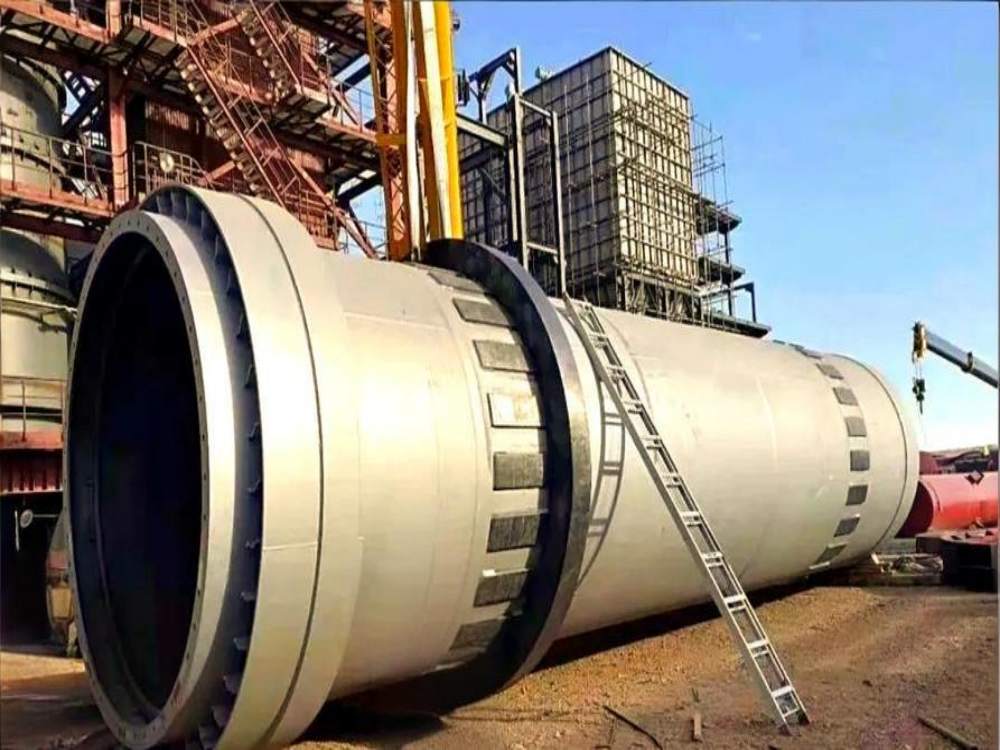
At the heart of the system is a cylindrical kiln that is tilted at a specific angle (1.5°–4.5°) and can be rotated at low speeds (0.15–2.5 rpm). In the process of traveling from the feeding end to the slag discharge end, the waste is constantly turned, lifted, and thrown off with the rotation of the kiln body, so as to realize the whole process of drying, pyrolysis, combustion and burnout. The high-temperature flue gas is fed into the secondary combustion chamber and stays at a temperature of ≥ 1100°C for ≥2 seconds to destroy highly toxic dioxin-like substances.
Core Benefits:
Strong material adaptability: Its unique dynamic tumbling characteristics make it a "general practitioner", and it can be compatible with complex components such as unbroken raw sharps, high-moisture dressings, liquid waste, heavy metal contaminating equipment and chemical agents.
Thorough harmlessness: The unique "two-stage" high-temperature oxidation process enables the decomposition rate of highly toxic persistent organic pollutants such as dioxins as high as >99.99%.
High degree of automation: PLC control system can be used throughout the process, and operation and management are relatively convenient.
Key Limitations:
High barriers to capital investment: It is a typical capital-intensive equipment. Projects with a daily processing capacity of 100 tons are built, and the initial investment often exceeds $3 million.
High demand for auxiliary fuel: When processing low-calorific value wastes such as wet dressings and high-moisture tissue, in order to ensure the stable temperature in the kiln, it is usually necessary to add auxiliary fuels such as natural gas, which increases energy consumption by about 30%.
Applicable scenario positioning: Its advantages are particularly prominent in the occasions of large processing scale and mixed material types, and it is an ideal choice for regional medical waste collaborative disposal centers and urban waste management centers.
4.Plasma incinerator
This technology uses electrical energy to drive a plasma torch or arc to generate local ultra-high temperature (> 1500°C), which instantly decomposes, reorganizes, and even converts various organic and inorganic components into vitreous slag.
Core Benefits:
Highest level of decomposition capacity: The device highly dissociates molecules through high temperatures, so dioxin levels in the exhaust gas are almost negligible, typically less than 0.1ng TEQ/m³.
The slag properties are extremely stable: the toxic leaching concentration of the vitrified slag produced is usually as low as <0.01 mg/L, making it extremely safe for the environment.
Major Challenges:
The energy cost pressure is huge: the power consumption required to process one ton of conventional medical waste is generally higher than 800kW·h, far exceeding the other three types of equipment, and the operating cost can often reach more than three times the technical price of rotary kilns.
The replacement cost of core technical components is high: among them, plasma torches and electrodes are the most consumable parts in the harsh working environment, and the service life is usually not higher than 4,000 hours, and the subsequent annual replacement cost may reach millions.
The adaptation direction is clear: at present, it is mainly used in the disposal of highly toxic, refractory and other high-risk chemical wastes generated in scientific research and chemical laboratories, or as a flue gas deep "refining" purification unit at the end of other mainstream incineration lines to achieve ultra-high standards of near-zero emissions.
II. Quantitative comparison of mainstream incineration technologies
Comprehensive quantitative evaluation (daily processing capacity ≤ 10 ton scenario)
| Evaluate the dimension | Closed fixed hearth incinerator | Fluidized bed incinerator | Rotary kiln incinerator | Plasma incinerator |
| Unit investment cost | $0.5-$100,000 | Approximately $30–500,000 | More than $500,000 | More than $1.5 million |
| Energy consumption per ton (combined) | 120–150 kWh | 180–250 kWh and may require combustion | 250–350 kWh + additional fuel consumption | > 800 kilowatt-hours |
| Annual maintenance cost/total value ratio | 8–12% | 20–25% (especially bed material consumption) | 15–18%, relatively stable | In particular, the proportion of electrode consumption is significantly higher |
| Sharps pretreatment | No need, direct feeding | necessary, and the crushing link is vulnerable to equipment | No need, compatible with all kinds of materials | Determined by the construction of the equipment |
| Manual intervention/operational complexity | Relatively low operating intensity, semi-automatic can be realized | Fluidized state needs to be pre-treated and maintained | High degree of automation | The control system is sophisticated and requires high operation and maintenance |
| Floor space requirements | Low, about 20㎡/set | Medium | High | Medium, but strong ventilation and electric control room are required |
III. Scenario-based technology selection decision-making analysis
The choice of appropriate disposal technology largely depends on the actual daily processing scale of the service organization, the physical and chemical properties of the medical waste to be treated, and the actual conditions such as the human and financial resources that can be mobilized. The specific selection suggestions are as follows:
Small and medium-scale medical waste (<5 tons/day, such as community health service stations, clinics, township health centers, etc.)
The core imperative of this scenario is to prioritize economics and ease of management. The closed stationary furnace with mature and reliable technology, easy operation and no rigid requirements for pretreatment has a comprehensive advantage in terms of technology and economy. Its main defects, such as uneven thermal field and manual intervention problems, have a relatively controllable impact in grassroots work with limited processing volume in a single batch.
Alternative evaluation: If the growth of medical waste in the service area is very certain, there is an expectation of stable exceeding the current load in the short term, and the operation team has strong professional capabilities, a flexible solution of building a small fluidized bed in the early stage or planning a later modular parallel connection for elastic expansion on the basis of a fixed bed can be adopted.
Medium-sized regional centers (5–20 tons/day, such as districts, counties and some municipal medical waste disposal stations, etc.)
At this time, system operation continuity and daily processing stability become equally important. Fluidized bed incinerators rely on their mature advantages in unit time processing capacity and continuous operation stability, which constitutes the mainstream choice in the current market. However, before choosing, the realistic matching degree of local professional needs such as material crushing and bed material replacement should be comprehensively evaluated.
Special attention: If the proportion of glass and sharps in medical waste generated in such scenarios is not low, the loss and danger of crushing pretreatment need to be included in the detailed plan discussion.
Large-scale urban and regional center treatment (30 tons/day >, covering large medical groups such as tertiary hospitals)
The goal of large-scale projects is to operate reliably, meet environmental standards and maximize harmless efficiency. At this time, although the investment cost per ton is considerable, its rotary kiln incineration system with high comprehensive harmless efficiency and strong material adaptability is still one of the most suitable ways to solve a large amount of complex medical waste.
IV. Future technological evolution and development roadmap
With the advancement of science and technology and the improvement of national environmental protection policies and carbon emission targets, medical waste incineration technology is developing in the direction of integration, intelligence and higher energy efficiency:
Application of intelligent management platform: By introducing real-time big data intelligent analysis and automatic control of temperature distribution, oxygen content, and flue gas composition as monitoring points, optimize combustion air rationing and combustion auxiliary decision-making, and continue to reduce the thermal burning rate of ash slag from the existing level of 8% or even lower.
Highly modular design and coupling of the processing unit: the core process is integrated into a modular sequencing mode. The economical fixed furnace can be used to complete the initial reduction pretreatment, and then the final depth treatment can be carried out by the back-end higher standard and specially customized plasma "flue gas secondary purification unit", which ensures the purification effect while balancing the overall investment cost.
In the end, the selection of medical waste incineration technology is not an isolated equipment selection problem, but the result of comprehensive consideration of various key variables such as budget management, site conditions, resource allocation capacity for operation and maintenance, and regional waste generation characteristics. A rational technical decision-making process requires a comprehensive understanding of its own conditions and an assessment of the advantages and challenges of different technologies in long-term operation to achieve the overall safety and sustainable operation of the project.
Incinerator flue gas treatment requires a multi-stage synergistic process to achieve efficient pollutant removal. The core process begins with rapid…

pollution control Environmental challenges
pollution control
Environmental challenges
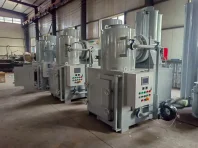
In the Chinese market, there are various types of waste incinerators, such as animal incinerators and medical waste incinerators, all…